
CrossMe Color Premium Nonogram
com.mobiledynamix.crossmecolor.premium
by Mobile Dynamix
Screenshots


Ad slot: Top Leaderboard
About this app
Nonograms are logic puzzles with simple rules and challenging solutions, keep you playing them!
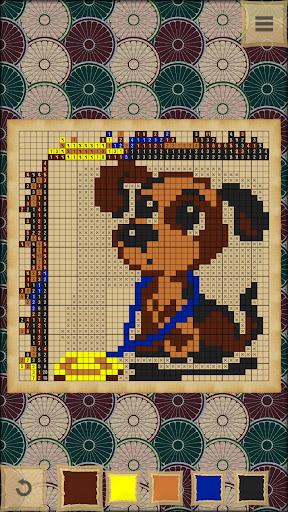
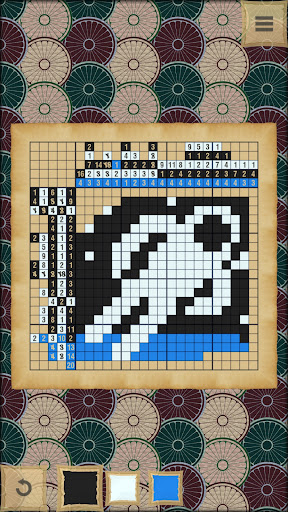
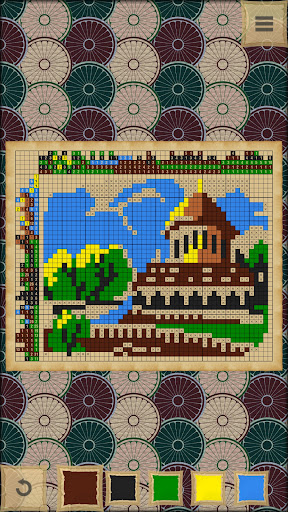
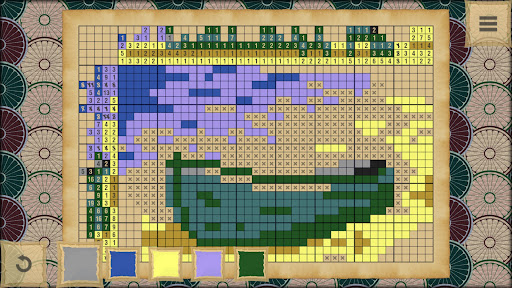
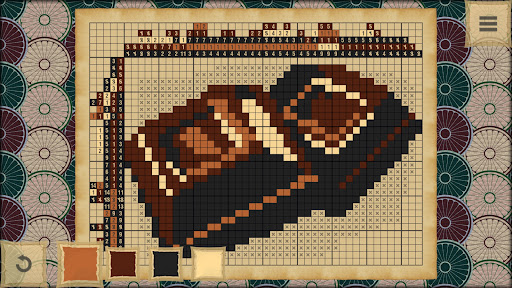
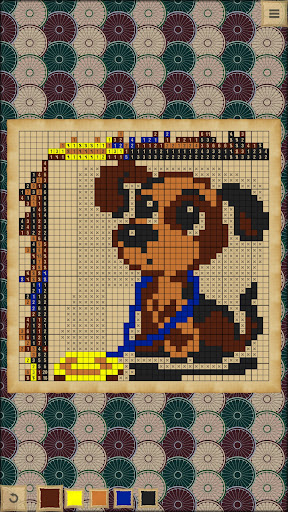
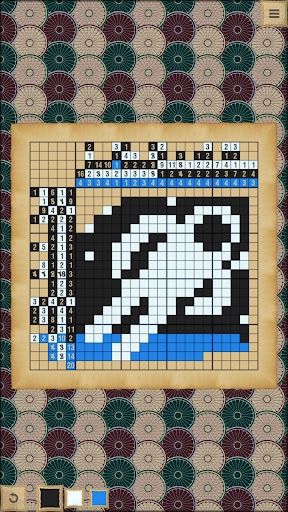
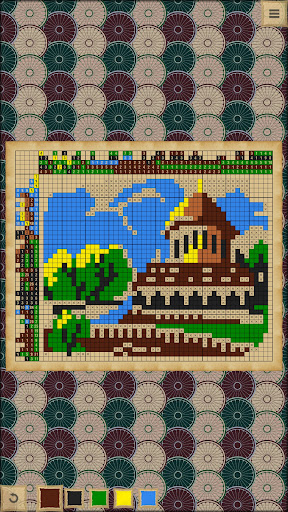
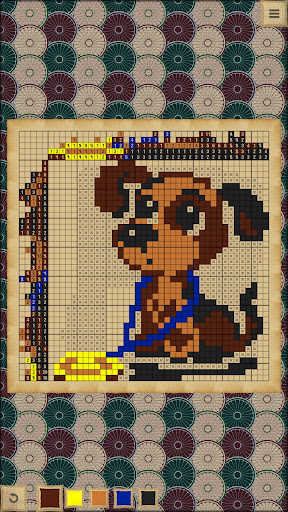
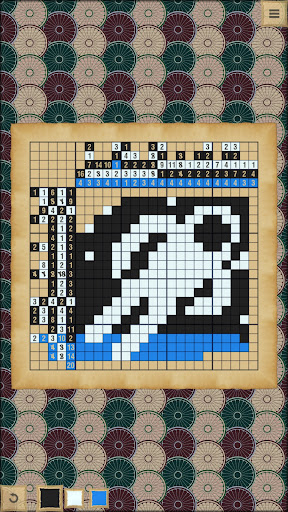
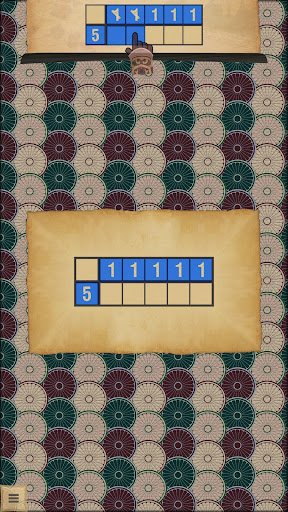
Fill the cells according to numbers at the side of the grid to discover a hidden picture. It’s also known as Picross, Griddlers, Hanjie and Japanese crosswords.
★ TONS OF PUZZLES
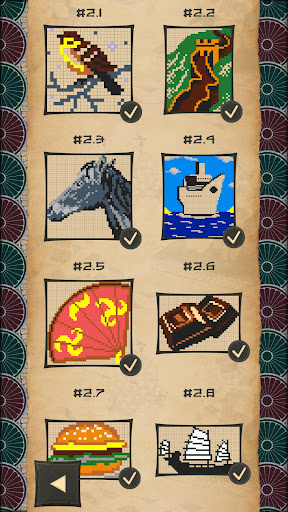
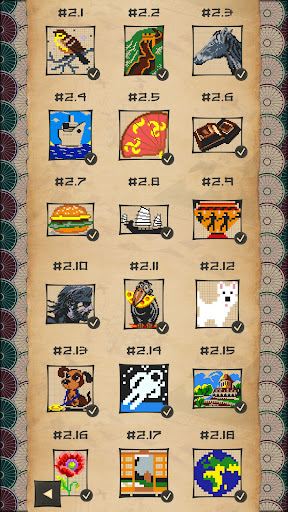
- more than 3000 different nonograms: animals, plants, people, tools, buildings, foods, sports, transports, music, professions, cars and more!
★ DIFFERENT SIZES
- ranging from small 10x10 and normal 20x20 to large 90x90!
★ GREAT TIME KILLER
- will keep you entertained in waiting rooms!
★ LIKE SUDOKU
- but it’s with images and way more fun!
★ A MENTAL WORKOUT
- exercise your brain!
★ WELL DESIGNED
- it's intuitive and beautiful
★ ENDLESS PLAYING
- unlimited number of random nonograms! You will never get bored with this puzzles!
★ NO TIME LIMIT
- it’s so relaxing!
★ NO WIFI? NO PROBLEM!
- you can play picross offline!
Nonograms, also known as pic-a-pix, started appearing in Japanese puzzle magazines. Non Ishida published three picture grid puzzles in 1988 in Japan under the name of "Window Art Puzzles". Subsequently in 1990, James Dalgety in the UK invented the name Nonograms after Non Ishida, and The Sunday Telegraph started publishing them on a weekly basis.
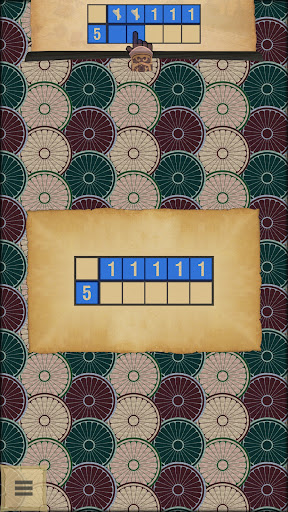
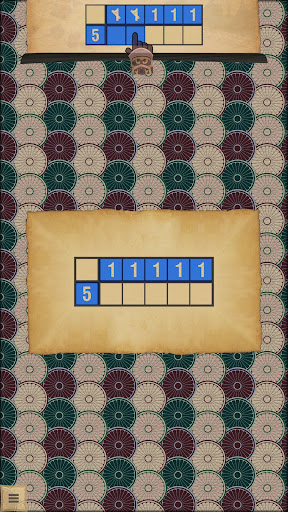
In japanese nonograms the numbers are a form of discrete tomography that measures how many unbroken lines of filled-in squares there are in any given row or column. For example, a clue of "4 8 3" would mean there are sets of four, eight, and three filled squares, in that order, with at least one blank square between successive groups. To solve Japanese nonogram, one needs to determine which squares will be filled and which will be empty.
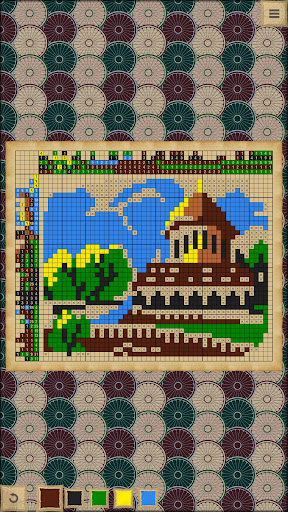
These nonograms are often black and white, describing a binary image, but they can also be colored. If colored, the number clues are also colored to indicate the color of the squares. In such crossword two differently colored numbers may have a space in between them. For example, a black four followed by a red two could mean four black boxes, some empty spaces, and two red boxes, or it could simply mean four black boxes followed immediately by two red ones.
Hanjie has no theoretical limit on size, and is not restricted to square layouts.
Griddlers were implemented by 1995 on hand held electronic toys in Japan. They were released with name Picross - Picture Crossword.
Fill the cells according to numbers at the side of the grid to discover a hidden picture. It’s also known as Picross, Griddlers, Hanjie and Japanese crosswords.
★ TONS OF PUZZLES
- more than 3000 different nonograms: animals, plants, people, tools, buildings, foods, sports, transports, music, professions, cars and more!
★ DIFFERENT SIZES
- ranging from small 10x10 and normal 20x20 to large 90x90!
★ GREAT TIME KILLER
- will keep you entertained in waiting rooms!
★ LIKE SUDOKU
- but it’s with images and way more fun!
★ A MENTAL WORKOUT
- exercise your brain!
★ WELL DESIGNED
- it's intuitive and beautiful
★ ENDLESS PLAYING
- unlimited number of random nonograms! You will never get bored with this puzzles!
★ NO TIME LIMIT
- it’s so relaxing!
★ NO WIFI? NO PROBLEM!
- you can play picross offline!
Nonograms, also known as pic-a-pix, started appearing in Japanese puzzle magazines. Non Ishida published three picture grid puzzles in 1988 in Japan under the name of "Window Art Puzzles". Subsequently in 1990, James Dalgety in the UK invented the name Nonograms after Non Ishida, and The Sunday Telegraph started publishing them on a weekly basis.
In japanese nonograms the numbers are a form of discrete tomography that measures how many unbroken lines of filled-in squares there are in any given row or column. For example, a clue of "4 8 3" would mean there are sets of four, eight, and three filled squares, in that order, with at least one blank square between successive groups. To solve Japanese nonogram, one needs to determine which squares will be filled and which will be empty.
These nonograms are often black and white, describing a binary image, but they can also be colored. If colored, the number clues are also colored to indicate the color of the squares. In such crossword two differently colored numbers may have a space in between them. For example, a black four followed by a red two could mean four black boxes, some empty spaces, and two red boxes, or it could simply mean four black boxes followed immediately by two red ones.
Hanjie has no theoretical limit on size, and is not restricted to square layouts.
Griddlers were implemented by 1995 on hand held electronic toys in Japan. They were released with name Picross - Picture Crossword.
What's New
New puzzles
App Information
Version Name
2.1.34
Version Code
60
File Size
18.1 MB
Minimum OS
Android 6.0+
Target SDK
Android 19
Developer
Mobile Dynamix
Contact
Website
Content Rating
Everyone
Package Name
com.mobiledynamix.crossmecolor.premiumPermissions Required
This app may request the following permissions:
Recent Reviews

Tamela D
4.0★
Excellent game. I've played other ones like this where the puzzles were obviously computer generated, so I'm glad this has better puzzles. On this game you actually make a picture (not just random lines from a picture) The difficulty seems to be right on, not too hard but not boringly simple. The only issue is I would rather the numbers slide on a separate layer as you move longer/taller puzzles, than the option to put the numbers at both ends. My brain has a hard time ordering it like that.

A Google user
5.0★
The puzzles are fun and challenging, and the game receives fairly regular updates that add new puzzles for all difficulties. The game was updated a while back so that using clues needs two taps, which really cuts down on accidental clue uses. This is good because clues are finite and monetized. This isn't necessarily bad, as I haven't spent a dime since the initial purchase. When I get stuck I just move to another puzzle if I don't want to (or can't) use a clue.
Kelly H.
5.0★
I've been playing this game since 2013. There always seems to be new puzzles added. Only thing I don't like about the new version is the lack of x to mark blank spots. I don't care for the new circle. It's smaller and less easy to see. Besides that, no complaints. *They added back in the x to mark blank spots and have added hundreds of puzzles since I last wrote this. This game was well worth the money then and still worth the money now. I have owned the app for 9 years.

Lisa B.
5.0★
Upped to 5 stars. Very nice app. Tons of puzzles. Can be zoomed on large puzzles and still access clues. Plenty of settings to customize your interface. Two issues: The settings menu needs some text labels. It took a long time to figure out the icons and I still don't know what one button does. Also, a crossout line over a completed number makes it illegible. A crossed out 2 or 5 looks like an 8. A line over the full cell or an X would be much better.

M C Smith-Jones
5.0★
I've had a version of CrossMe on every phone since my very first android, over 10 years ago. The logic is basic, but turns out to be surprisingly challenging as you go up in levels. It's also something I can pick up for 5 minutes here and there, and put down again when I need to do something else. Highly recommend, would give 6 stars if I could.

Christopher Jensen
5.0★
I've been playing this game for about 11 years. By far the best casual game I've played on Android. I've done over half of the puzzles so far. They add them faster than I play them. I've played it daily and sometimes put it down for months before playing again. As far as I can tell it's not addictive or made with any of those negative game mechanics, but it is very satisfying especially with the harder pictures and seeing a detailed picture at the end.
Ad slot: In-Content